Why careers matters for schools
8th October 2025
In many schools, careers education and guidance are viewed as peripheral activities which are secondary to the main purpose of school. In recent years there has been some increased pressure from the Government and Ofsted to pay attention to this area, but it is easy to see it as just another box to be ticked.
But there are some really good reasons why schools should place career guidance at the centre of their mission.
- Education is about transforming the lives of young people. Ultimately this is about helping people to build a positive life and use their education to secure and excel in work.
- Students who are motivated about their future and understand the life relevance of what they are learning focus more on their studies.
- Careers provides a brilliant cross-curricula theme that allows schools to connect subjects (and extra-curricular activities) and build a vision across all their activities.
With this approach, schools would place the idea of supporting young people to establish a successful career at the heart of everything they do. Career education and guidance then become the connective tissue that allows schools to achieve this kind of vision.
Careers needs to be led
An excellent careers programme has the potential to transform a school, but it won’t just happen by accident. In the Careers Leader Handbook we set out a step-by-step approach to developing your programme.
The first step is to identify a careers leader who is capable of driving the careers programme forward in your school. Schools now have a statutory duty to appoint a careers leader. Such a person can be from a range of professional backgrounds and may combine the role with other tasks within the school. But, they will definitely need time to do the role, possess expertise about what needs to be done, and have the authority in school to drive change.
Careers cannot be viewed as the responsibility of a single person. The days of sitting the careers adviser in a cupboard and sending year 10s and 11s down the corridor to see them are over! Rather, good career guidance is a multi-professional activity that involves all teachers as well as specialist staff like careers advisers and work experience co-ordinators. The role of the careers leader is to manage and co-ordinate all of this activity and to ensure that people work together and make use of external resources, such as employers, local colleges and universities.
What does a good programme look like?
There is a very clear description of what a good career guidance programme should look like in the Gatsby Benchmarks. This framework sits at the heart of the Careers Leader Handbookas it provides a very clear description of what schools need to do to build their careers programme.
First, they need to have a clear vision and create a plan of what they are trying to achieve. This includes setting out what will be experienced by each year group (starting in year 7 or even before) and how the programme will be structured and led. The Benchmarks set out all the components that make up a good programme. So, it should include things like providing access to labour market information, involving employers and post-secondary education providers, and offering access to careers advisers and work experience.
Perhaps most importantly, a good careers programme should be embedded into the curriculum and personalised to suit the needs of every individual. All this means that careers need to become a universal offering for all your students, as well as something that is delivered in a tailored way that recognises that everyone’s needs are different.
Getting started
Hopefully this blog has inspired you to take another look at your school’s career programme. We believe that a well organised careers programme can be transformational for schools and young people. This requires you to think big and identify a new approach to leading the programme. We hope that the Careers Leader Handbook will provide you with the map that you need to plan this journey.
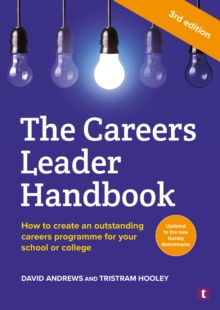
The Careers Leader Handbook
Andrews, David
Paperback / softback
The third edition of this bestselling handbook for careers leaders has been fully updated to reflect the revised Gatsby Benchmarks and includes a foreword by Ryan Gibson, who led the national review into the Gatsby Benchmarks. The importance of delivering good careers education and guidance in schools and colleges has never been greater. Statutory guidance sets out the requirement for every school to have a named careers leader. They are expected to lead, manage and co-ordinate the school’s careers programme, across all eight Gatsby Benchmarks. This is a big job and it is often one that people will begin with little training or experience. Drawing on 35 years’ experience of careers work, David Andrews and Tristram Hooley provide you with everything that you need to know to lead effectively and develop your role and expertise. Updated throughout to reflect the revised Gatsby Benchmarks, as well as the changes in the policy, educational and economic context in which careers leaders are now working, the third edition continues to offer practical advice and ideas for planning, developing and maintaining an excellent careers programme. Highlighting the latest resources and support available, it also gives you plentiful tools – both in the book and in additional online materials - to help you become an outstanding careers leader. Whether you are already a careers leader, about to become one, or are involved in the training of future careers leaders, this is the book for you!
More Details